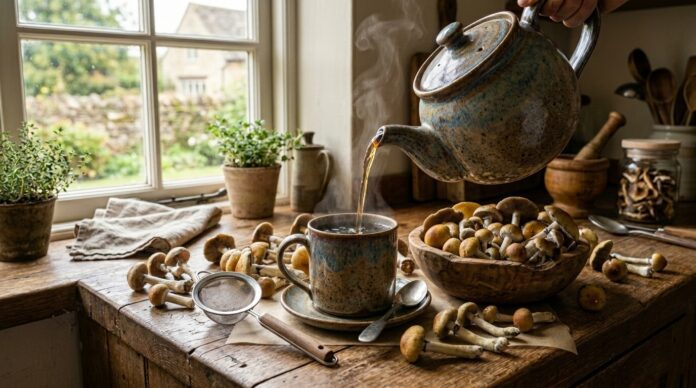
The tea cup is the first altar you build before the journey begins. You don’t start by measuring mushrooms on a scale or setting a timer. You begin with water, and then heat, and then time — all of it working in tandem to coax the medicine into liquid form. That’s where this guide starts: not with a recipe, but with an understanding that preparation is practice.
Mushroom tea has been a popular method of consuming magic mushrooms for centuries, from the Mazatec veladas held under the lightless moon to the quiet kitchens of modern-day psychonauts seeking clarity in their daily lives. But the way you prepare it matters more than most people realize. Temperature, steeping time, and even the texture you grind your mushrooms into can mean the difference between a gentle drift and a jagged edge.
This guide will walk you through everything: selecting your material, understanding what’s happening inside the cup, crafting flavors that support your intention, and knowing exactly how much to take based on what you’re looking for. We’ll also cover why tea is often gentler than eating mushrooms raw, and when (and how) microdosing might make sense — because there are honest answers here, even for the questions that don’t have one yet.
Why Choose Mushroom Tea?
Tea isn’t just a convenient delivery system — it’s a different experience in its own right.
Faster Absorption
When you drink tea, psilocybin dissolves into the liquid and travels directly to your stomach, where enzymes rapidly convert it to psilocin (the active compound). You typically notice perceptual shifts within 15–30 minutes, compared to 45+ minutes with capsules or raw mushrooms. That shorter wait means less anticipatory anxiety — you’re not staring at a pill waiting for something to happen; you’re already in the flow.
Easier on the Stomach
Mushrooms are chitin-heavy. Eating them raw can cause nausea, cramping, or that familiar “I should have waited” feeling as your digestive system wrestles with fungal cell walls. Tea breaks down some of that chitin before it reaches your gut, making the experience significantly smoother. Many people find they can drink tea while still at work — something whole mushrooms rarely allow.
More Precise Dosing
You can measure out exactly 0.2 grams for a microdose or 1 gram for a full trip. There’s no guessing whether you’re eating enough. And because the liquid is already extracted, every drop contains what it contains — nothing gets left behind in the residue at the bottom of your mug.
A Cultural Lineage
Tea-making is a practice with deep roots. In the Mazatec tradition of Oaxaca, mushrooms are bathed in copal smoke before being eaten two at a time to represent duality and unity. Santo Daime practitioners in Brazil brew ayahuasca tea through hours of ceremony and song. The act of steeping — watching color leach from the material into water — is itself a meditation. You’re not just preparing a beverage; you’re participating in a lineage that stretches back centuries, from Amazonian shamans to the quiet corners of modern psychonaut communities.
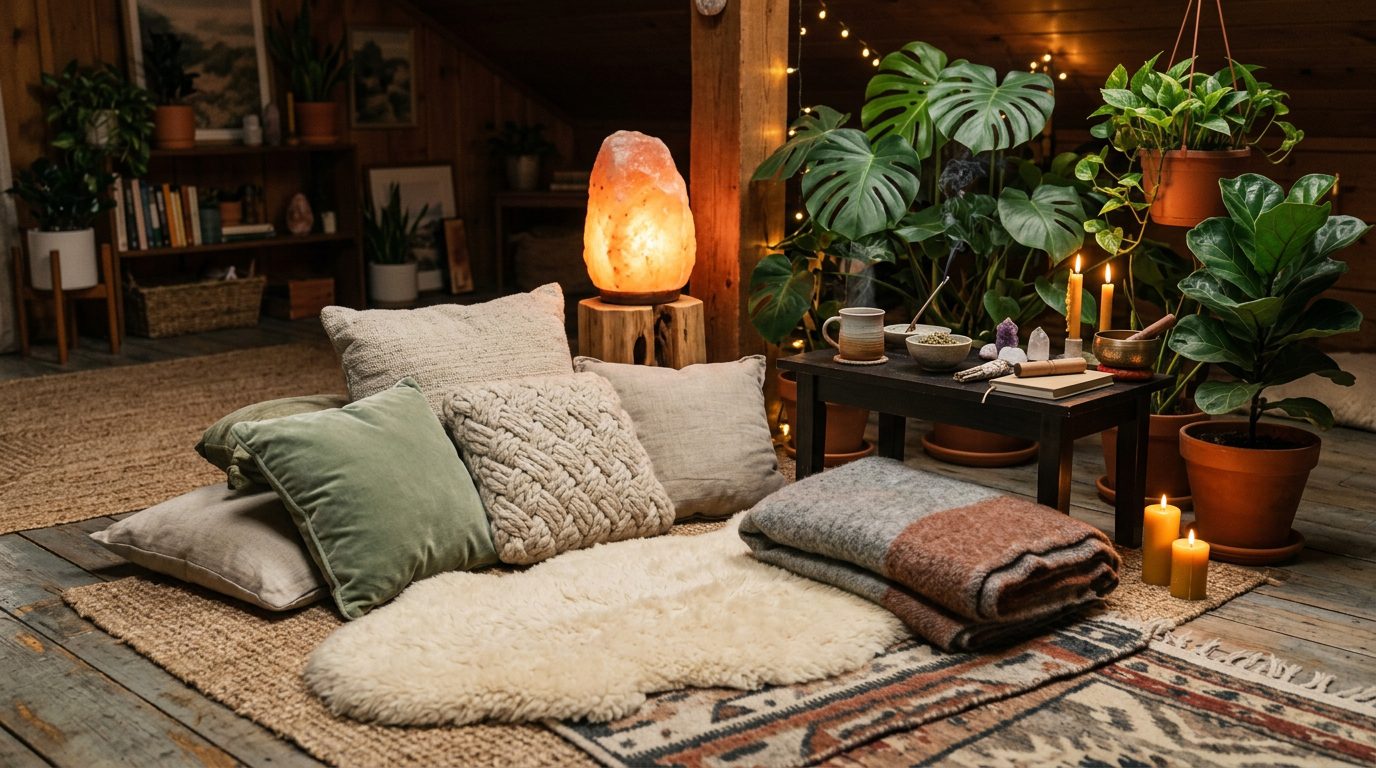
Setting the Space: Set and Setting Simplified
Timothy Leary introduced “set and setting” in 1964, but it’s easy to treat it as abstract jargon. Let’s make it practical.
Your Set (Mindset)
Ask yourself before you brew: What do I want from this? Not what might happen — what do I want? Are you looking for creative breakthroughs? Emotional release? A sense of connection to something larger than yourself? The answer doesn’t need to be profound. It just needs to exist.
Write it down if you can. Or say it aloud before your first sip: “I’m doing this to…” — complete the sentence honestly. That’s all preparation requires from a practical standpoint.
Your Setting (Environment)
Physical surroundings matter far more than most people assume. The DoubleBlindMag guide on things to do on shrooms suggests lying down on earth, listening to psychedelic music, painting with watercolors — but it also quietly acknowledges that the environment shapes what you can access. If your setting is chaotic or unfamiliar, even a gentle dose can feel overwhelming.
A few practical guidelines:
- Lighting: Dimmer than usual, not pitch black. A warm lamp works better than harsh overheads.
- Sound: Instrumental music or silence. Lyrics can pull you into language and away from the inner landscape.
- Temperature: Cool but not cold. You don’t want to be distracted by physical discomfort.
- Company: If possible, have a sober friend present — not as a monitor, but as witness.
The Five-Minute Pre-Ritual
Before you turn on the kettle:
- Wash your hands. It grounds you in your body.
- Choose your vessel. A ceramic mug feels different than a glass one. Go with what matters to you, not what looks right online.
- Set your intention out loud, even if it’s just “I’m ready.”
- Breathe for three minutes. Nothing fancy — just inhale through the nose, exhale through the mouth.
That’s it. You’re now in the same space as the Mazatec curanderos preparing their veladas, the Santo Daime communities singing before the brew begins, and the countless psychonauts who’ve found that small rituals make big differences.
Selecting Your Material: What to Buy and Why
Dried vs. Fresh
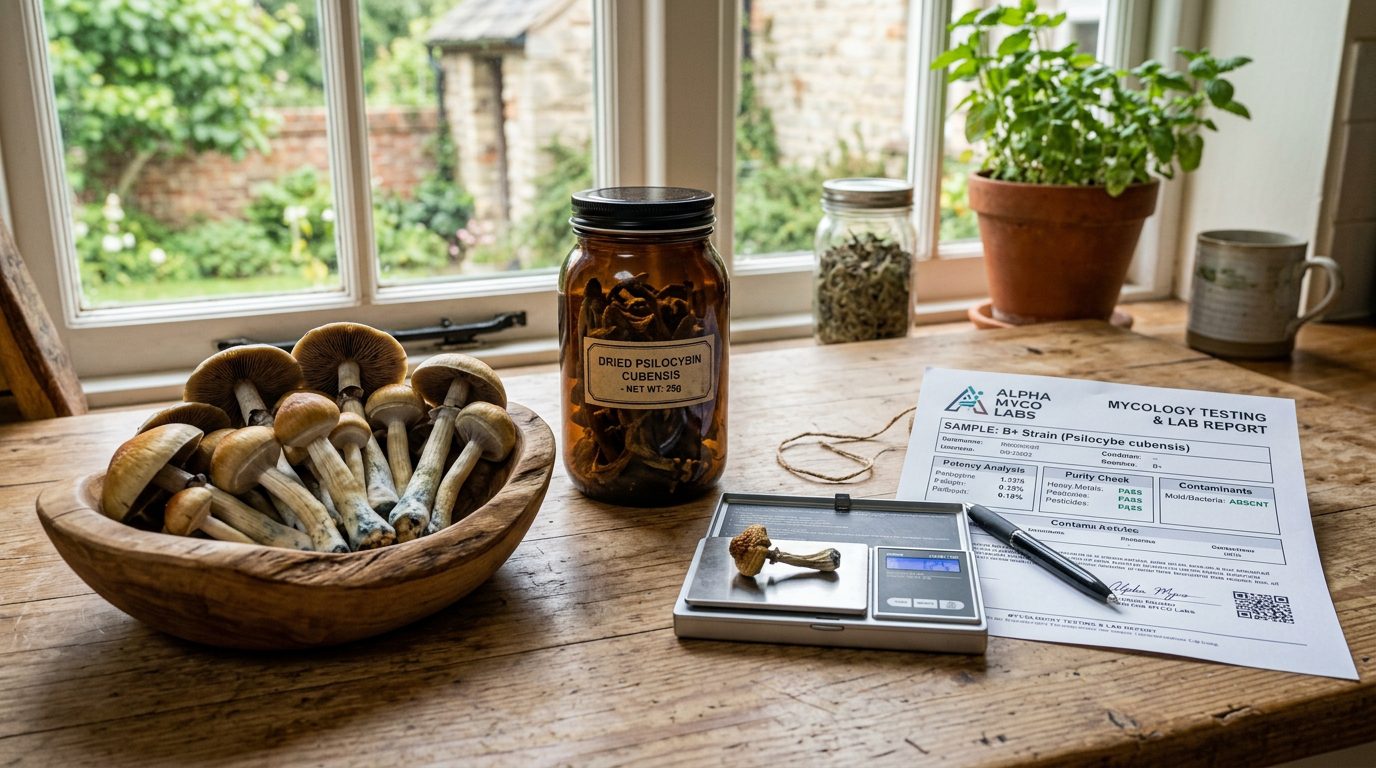
Dried mushrooms are easier to store, weigh precisely, and transport. They retain their potency well if kept in a dark container away from humidity. Fresh mushrooms contain more moisture (and therefore less psilocybin per gram by weight), but they’re often cheaper and may feel fresher to some people. For tea purposes, dried is generally preferred because the drying process concentrates the compounds.
Quality Markers
When you buy dried mushrooms:
- Color: Deep brown with a slightly earthy sheen. Avoid pale or chalky pieces.
- Texture: Crisp when dry, not brittle-shattered (which suggests they’ve been stored in a warm place).
- Aroma: Should smell distinctly fungal — woody, earthy, maybe faintly sweet. No off-smells like moldy hay or ammonia.
Sourcing
If you’re buying online or from a physical dispensary where available: prioritize vendors who test for psilocybin content and contamination (heavy metals, pesticides). Some reputable sources publish lab results; others don’t — know what you’re working with. If you’re growing your own, that’s a valid path too, but it requires understanding the biology of Psilocybe cubensis cultivation.
The Science of Extraction: How Heat and Time Work Together
This is where most guides get it wrong — or at least vague enough to be unhelpful. Let’s break down what actually happens when you heat water with psilocybin-containing material.
The Temperature Threshold
Psilocybin begins degrading around 150°C, but that’s not the real concern in tea-making. The problem is psilocin oxidation. Psilocybin (4-phosphoryloxy-N,N-dimethyltryptamine) converts to psilocin (4-hydroxy-N,N-dimethyltryptamine) through dephosphorylation — a natural metabolic process your body performs too, but one that heat and water can accelerate.
The research is clear: boiling water (212°F / 100°C) combined with prolonged steeping converts more psilocybin to psilocin faster, and psilocin degrades rapidly in warm, oxygen-exposed liquid once it’s formed. The practical result? A slightly less predictable dose and a faster decline of effects over time.
The sweet spot is 160–175°F (70–80°C) — hot enough to extract efficiently, cool enough that degradation happens slowly if anything at all. Let freshly boiled water sit for 1–2 minutes before pouring it over your mushrooms. You can verify this with a thermometer, or just wait and feel the steam’s intensity drop.
Grinding vs. Chopping
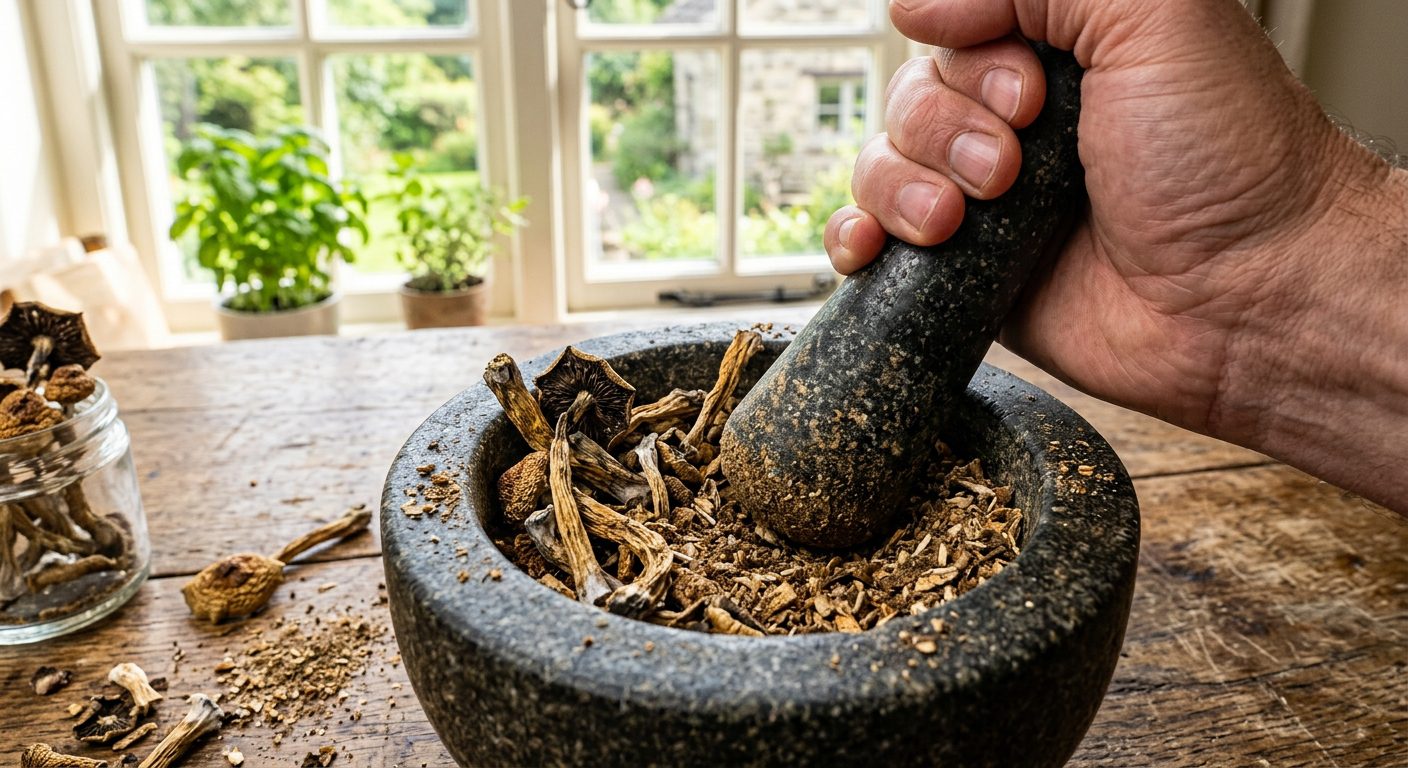
Surface area is extraction’s best friend. A whole mushroom chunk might release its contents over an hour of steeping. Ground material releases them in 10–15 minutes. The difference isn’t dramatic — it’s measurable.
For tea, use a coffee grinder or mortar and pestle to achieve a coarse powder. You don’t need flour-fine consistency (that makes the tea gritty), but you do want particles small enough that water can reach them quickly. If you’re chopping by hand, aim for pieces no larger than ⅛-inch fragments.
Steeping Time
Ten minutes is enough. Twenty is fine if you want extra margin. Going beyond 20 minutes offers diminishing returns and increases the chance of degrading compounds. The color change — from clear to golden-brown or slightly blue-grey — signals that extraction is proceeding well, but it’s not a perfect indicator of potency.
Second Infusion?
After straining your first cup, you can pour fresh hot water over the same material for another 10-minute steep. This second infusion contains roughly half the potency of the first (the exact ratio depends on grinding quality and time). Many people discard it because they don’t want to guess how much extra dose they’re getting — but if you’re comfortable with variability, a second cup at roughly half strength is perfectly fine.
What About Simmering?
Some guides recommend simmering mushrooms in water for 15–20 minutes on the stovetop. The research suggests this isn’t necessary and introduces two problems: (1) prolonged heat exposure accelerates psilocin conversion, and (2) you risk losing volatile aromatic compounds that contribute to flavor. Steeping is simpler and just as effective.
The Recipe: Flavor Matters Because It Does
Flavor isn’t a distraction — it’s part of the experience. Bitter, acrid tea can make you resent what you’re taking. Pleasant-tasting tea helps you stay present with what’s happening inside you. Here are three profiles that have stood the test time and again.
The Basic Recipe (1 serving)
| Ingredient | Amount |
|---|---|
| Dried psilocybin mushrooms | 0.5–2 grams (adjust to desired dose) |
| Filtered water | 8 ounces (~240 ml) |
| Steeping vessel | Teapot, French press, or mug with infuser |
| Strainer/cheesecloth | For removing solids |
Steps:
- Grind mushrooms into coarse powder.
- Heat filtered water to just below boiling (wait 60 seconds after the boil stops).
- Pour over ground material in your vessel. Cover with a saucer or lid — heat loss reduces extraction efficiency.
- Steep for 10–15 minutes, stirring occasionally.
- Strain through cheesecloth, fine mesh strainer, or coffee filter into your drinking vessel. (Coffee filters are the cleanest but add paper flavor; a French press gives you control over how much sediment remains.)
The Ginger-Lemon Profile
Ginger is more than just flavor here — it has anti-nausea properties that can be valuable if you’re prone to stomach sensitivity. Lemon juice enhances extraction by lowering pH slightly, which helps release psilocybin from the fungal matrix.
Add 1–2 tablespoons of fresh lemon juice and a few slices of fresh ginger root during the steep. The result is bright, zesty, with a warmth that builds as you drink.
The Honey-Sage Profile
Honey adds sweetness and antioxidants; sage (or other dried herbs like chamomile) contributes earthy notes that complement the mushroom flavor without competing with it.
Add 1 tablespoon of raw honey after steeping (heated honey loses some of its beneficial compounds). Steep a tea bag of loose-leaf sage or chamomile alongside your mushrooms for a more complex brew.
The Morning Blend
For daytime use, pair your mushroom powder with a green tea base — the catechins and L-theanine in green tea create a grounded, focused energy that can counteract any jitters from caffeine’s absence. Add a squeeze of lemon or a dash of cinnamon if you prefer warmth over brightness.
What About Coffee?
Some people brew their mushrooms directly in coffee grounds, but this is unreliable — coffee beans vary wildly in density and particle size, making extraction inconsistent. Stick with hot water alone for maximum predictability.
Dosage & Microdosing: The Honest Truth
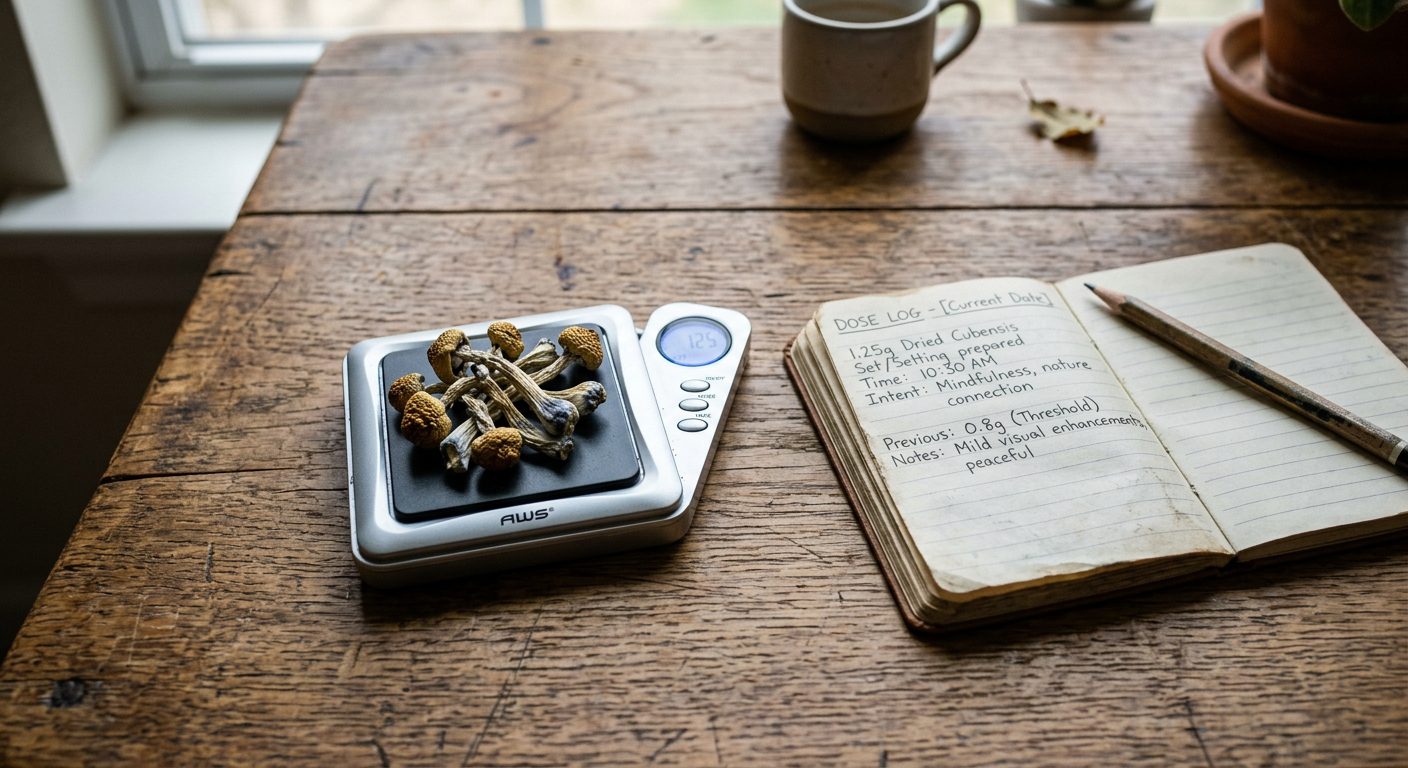
Dosage depends on three variables: potency of your material, your body weight, and your tolerance. Since you can’t reliably measure psilocybin content in dried mushrooms (it varies widely even within the same species), we work in ranges.
Tea Doses
| Intensity | Amount (dried) |
|---|---|
| Microdose | 0.1–0.3 grams per day |
| Low / beginner trip | 0.5–1 gram total |
| Medium trip | 1.5–2.5 grams total |
| High dose | 3+ grams (not recommended for first-timers) |
If you’re new to mushrooms, start at the bottom of your range and wait. The effects of psilocybin are cumulative over time — a half-gram won’t give you a full-blown trip on day one, but it will prepare you. If nothing happens in the next hour or two (you’ve waited long enough), you can add another 0.25–0.5 grams and stir it into your tea.
The Microdosing Research Update
This is where honesty matters. You’ll find plenty of sources claiming microdosing psilocybin boosts creativity, focus, and mood with zero downsides. A 2024 systematic review published in CNS Drugs examined randomized controlled trials and found no consistent evidence that psilocybin microdosing improves depression, anxiety, or stress symptoms in healthy adults beyond placebo effects. Other studies have shown modest improvements in well-being and some subjective measures of cognitive flexibility — but the picture is mixed.
That doesn’t mean microdosing is useless. It means it’s not a magic pill. The placebo component may be substantial (expectancy plays a role), but so might subtle neurobiological effects that haven’t been fully mapped yet. What we do know: when used consistently over weeks, many people report improved mood and reduced anxiety — but these aren’t universally guaranteed outcomes.
If you’re considering microdosing:
- Keep a journal noting your dose, method (tea vs. capsule), and subjective effects.
- Start at the low end of the range (0.1 grams) and track how your body responds over several days before increasing.
- Remember that legal status still makes this a gray area in most jurisdictions — check your local laws.
The Therapeutic Context
Clinical trials for psilocybin-assisted therapy typically use doses around 25 mg of pure psilocybin, which translates to roughly 1–2 grams of dried Psilocybe cubensis mushrooms (potency varies). These sessions are paired with psychotherapy and preparation work — the tea is just one component of a much larger protocol. The effects can be profound: studies show rapid reductions in depression scores within days, with benefits persisting for months after a single session. But these trials involve rigorous screening, psychological support before and after, and experienced facilitators guiding participants through difficult emotional material.
You’re not in a clinical trial when you brew tea at home — but that doesn’t mean the experience isn’t meaningful. It just means it’s yours to navigate without a protocol.
The Ritual of Drinking
The final act of preparation is drinking itself, and this deserves as much care as everything before it.
Before Your First Sip
Take three deep breaths. Set your intention again if you need to — not by force, but by gentle reminder. You might say something like: “I’m open. I’m curious. I don’t need to know what happens next.” That’s the right posture for tea as well as for any other method.
Drinking Pace
Don’t gulp. Sip slowly over 10–20 minutes. The effects will begin rolling in during this time — warmth in your chest, a lightening of thought, perhaps a shift in how you perceive the room around you. Let yourself sit with it rather than rushing through the cup to get “to” something else.
Integration Moments
If you’ve written down an intention, revisit it after the tea has taken. If nothing came up during preparation, that’s fine too — sometimes the work happens later, when the experience is more settled. A journal can be helpful here: write freely without judgment about what moved you, what surprised you, what felt true or false.
What About the Residue?
If you’re drinking a full batch of tea, some people wonder whether to drink down every last drop including sediment. The short answer: yes. Psilocybin continues extracting over time, and the compounds are dissolved in the liquid regardless of particulate matter. If using a fine filter or paper coffee filter, you can be certain the solids are removed. With a French press or cheesecloth strainer, gently pressing on the residue will release remaining liquid — just be prepared for some grit at the bottom if you drink it all.

🍄 Cultivate Your Own Psychedelic Journey with Shayana Shop
For those who prefer to take matters into their own hands, growing your own psilocybin mushrooms at home is an entirely rewarding experience — one that transforms from a scientific pursuit into a deeply personal ritual. Shayana Shop has established itself as a trusted destination for cultivating magic mushrooms, offering a comprehensive selection of growkits designed for both beginners and experienced growers. Their kits contain fully matured mycelium primed for growth, sterile substrates, and all the essentials needed to produce your own harvest within just 2–3 weeks.
The range is remarkably diverse: the Golden Teacher (named after its striking golden-yellow spore prints) offers a balanced, gentle journey; the Mexicana brings warmth and grounded energy with its earthy profile; the McKennaii delivers one of the most profound and deeply introspective experiences available; the B Plus is renowned for its clarity-enhancing properties and spacious mental landscape. For those seeking subtler journeys, the Colombiana, Mazatapec, Cambodia, and Thai strains each offer distinct flavor profiles and intensity levels tailored to different intentions.
Beyond the growkits themselves, Shayana Shop provides essential cultivation accessories including precision heating mats for temperature control and digital thermo-hygrometers for monitoring humidity — both critical factors in maintaining optimal mycelium health throughout the fruiting phase. Whether you’re a seasoned cultivator or just beginning your journey into home mushroom growing, this collection offers everything needed to bring psilocybe cubensis life from spore to harvest with confidence and care.
Safety & Legality: A Brief Note
Legal Status
Psilocybin is classified as a Schedule I substance in the United States federally, meaning possession, manufacture, and distribution are illegal under federal law. However, decriminalization has moved forward in several jurisdictions — Oregon and Colorado have passed measures removing criminal penalties for personal use, while other cities and states have followed suit or proposed similar legislation. Outside the U.S., countries like Canada, Australia (for certain mental health indications), Portugal, Mexico (under Article 195 bis of the Federal Penal Code, which exempts spiritual/ceremonial use), and others have varying degrees of decriminalization or legalization.
Always check your local laws before acquiring or consuming psilocybin mushrooms. This guide is for educational purposes only and does not constitute legal advice.
Physical Safety
- Start low. Even experienced users can be surprised by a new batch’s potency.
- Don’t mix substances. Alcohol, benzodiazepines (like Xanax), and MAOIs can have unpredictable interactions with psilocybin metabolism.
- Hydrate. You’ll drink more tea than usual — that’s part of the experience, but don’t overdo it to the point of discomfort.
- Eat before or after. An empty stomach intensifies effects; a full stomach delays them. If you’re prone to nausea, eat something light beforehand (toast, banana).
When Not to Use
If you’re experiencing acute psychosis, have severe cardiovascular disease, or are pregnant or breastfeeding, avoid psilocybin until you’ve consulted with a qualified healthcare provider. These aren’t absolute contraindications for everyone, but they warrant caution.
Storage & Sharing: Tea as Community Medicine
Refrigeration and Freezing
If you’re brewing a large batch (say, 500 ml or more), refrigerate it in a sealed glass container within an hour of preparation. It stays fresh for 2–3 days. For longer storage, freeze the tea in ice cube trays — each cube is roughly one standard dose and can be thawed as needed over weeks or months.
Dose Equivalency
If you’re making a batch to split among friends (and only if everyone has given informed consent and understands what they’re agreeing to), here’s how to divide:
- 1 gram of dried mushrooms in ~250 ml water = roughly 4 standard servings at 0.25 grams each, or one medium dose per person.
- Adjust based on group tolerance — if everyone’s experienced with a full trip, you can scale up the base material accordingly.
The Community Aspect
Tea is inherently shareable in a way capsules aren’t. A pot means people are drinking from the same vessel at roughly the same time — a subtle but meaningful synchrony. In many traditions, sharing tea (or ayahuasca brew) is an act of communion. You don’t need to frame it that way for it to feel real.
Closing: The Cup as Container
Mushroom tea is one vessel among many for that work. It has its own strengths: speed of onset makes it accessible for daytime use; the liquid form feels less final and more fluid than swallowing a capsule; the ritual of brewing can itself be grounding when you need to arrive in your body. And the flavors — ginger’s warmth, lemon’s brightness, honey’s sweetness — remind you that this is part of life, not separate from it.
Whatever you’re seeking: clarity, connection, release, or simply a different way to sit with what you already carry, tea offers a path that’s gentle enough for first-timers and precise enough for experienced practitioners. The science supports its efficacy; the culture surrounds it with reverence; the practice is yours to adapt, adjust, and own.
Brew slowly. Drink mindfully. And remember: the best thing you can do on mushrooms is sometimes simply this — be present in a way that feels new.
References (Selected)
- Pharmacology: Wiley Review of Psychoactive Substances (2024), “Psilocybin, From Ancestral Use to Therapeutic Potential.”
- Clinical trials: Usona Institute Phase 3 MDD trial (2024–present); UNC TRD trial (expected completion September 2026).
- Extraction science: Journal of the Brazilian Chemical Society extraction yield comparison at various temperatures; RCL 2024 psilocybin extraction study.
- Microdosing review: Polito & Liknaitzky, “Is microdosing a placebo? A rapid review” (Sage, 2024).
- Set and setting: Carhart-Harris et al., fMRI studies on DMN modulation by psychedelics (PMCID: PMC8830367, PMC10032309, PMC11258181).
- Cultural context: National Geographic “Drug Cultures Around the World”; Mazatec velada traditions documented in ethnographic literature; Center for the Study of World Religions article on psilocybe rituals (July 2024).

